
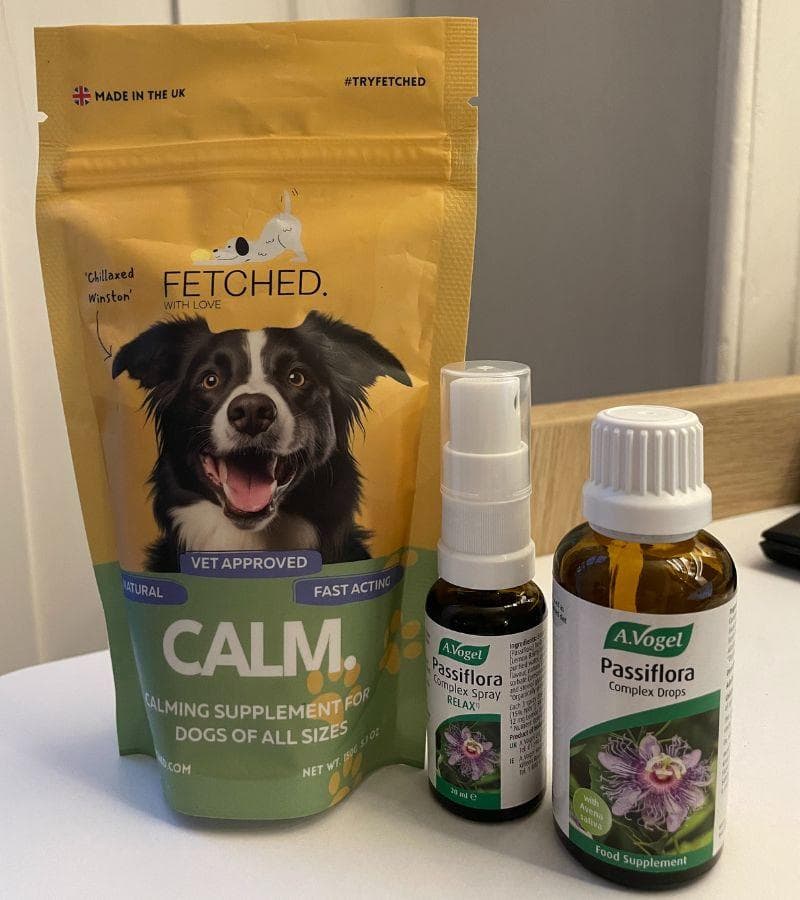
In humans, passion flower or (aka passiflora) is a useful herbal remedy for stress relief. But how does passion flower for dogs work? Does it work the same way? As the main ingredient in our dog calming treats and food toppers, we wanted to see what the research shows.
What is Passion Flower (Passiflora)?
Passion Flower is a vibrant plant that's native to the Americas. It has been used for centuries by indigenous tribes for its calming and healing properties.
Pubmed records several research papers focused on the effects of passion flower and we will go through those in a bit.
Interestingly, the passion flower itself boasts over 500 different species, each with slightly different strengths and flavours.
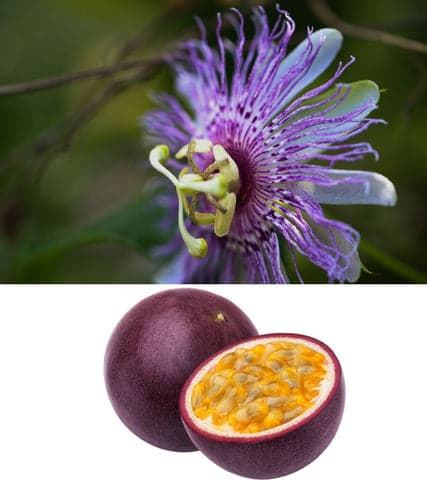
For therapeutic use, the most common species is the Passiflora incarnata. You may infact be more familiar with its fruit, the passion fruit!
That's right, if you didn't know, the fruit of the Passion Flower incarnata is the passion fruit that's known for its marvellous taste. Just like the passion flower itself, the fruit is also packed with nutrients and benefits. But that's a story for another day!
While initially recognised for human consumption, the flower's therapeutic potentials have found resonance in pet care over the years.
The plant's efficacy can be attributed to its rich composition of flavonoids, alkaloids, and other vital compounds. These elements synergistically interact with the nervous system, promoting relaxation and alleviating stress.
They also tend to work well in combination with other neturally anxiolytic ingredients.
What is the research around Passion Flower for dogs?
While no specific research studies have been done directly on dogs, Passiflora Incarnata has been studied on mice, rats and in various human studies.
We can therefore infer that the effects obtained will also apply to dogs and even cats.
The most recent systematic review (highest level of scientific evidence) examining the evidence behind Passiflora Incarnata was performed in 2020. This review examined nine clinical trials, which all had favorable results. The majority of studies reported a decrease in anxiety levels after a duration ranging from one day up to 30 days.
The effects were most pronounced in those with moderate or high anxiety symptoms. One noteworthy fact is that there were no adverse effects, including no memory loss nor cognitive inhibition or any sort of dysfunction.
All in all, the results appeared very promising.
For this reason, human specific products such as these are very popular nowadays.
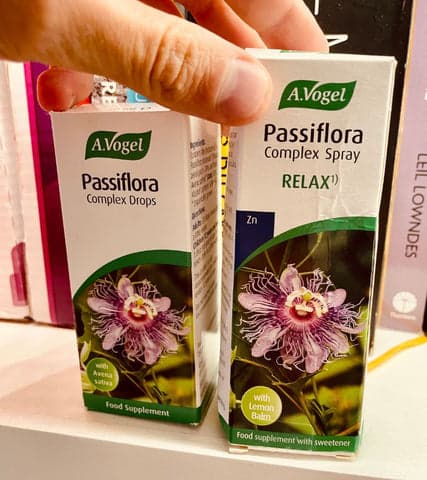
For me personally, I always find that it helps calm me down particularly after a stressful day at work.
How is Passiflora or Passion Flower useful in dogs?
Passiflora probably works in dogs in the same way as in humans.
Although not known for sure, scientists believe that Passiflora works by increasing the levels of GABA in the brain.
GABA, gamma aminobutyric acid, is a neurotransmitter, or a chemical messenger that allows communication between brain cells, or neurones. It works to reduce the levels of activity in the brain, so it's known as an 'inhibitory' neurotransmitter.
The role of GABA is essentially to counteract and balance out the effects of excitatory neurotransmitters such as glutamate or adrenaline, the fight or flight hormone.
This balance between inhibitory and excitatory neurotransmitters is essential for a healthy, well-functioning brain.
By slightly increasing the levels of GABA, Passiflora can naturally promote calm, relaxation and tranquility in both dogs and humans.
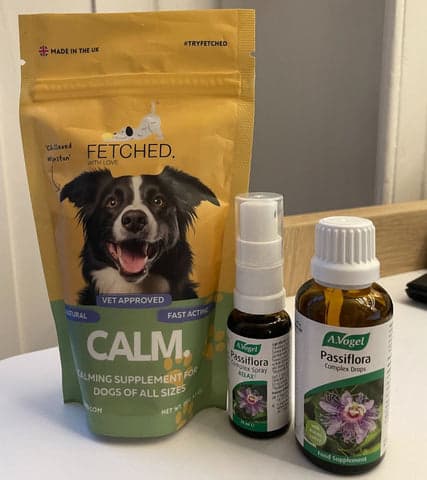
Our dog calming food topper also comes with other ingredients that promote relaxation, including lemon balm, taurine and essential amino acids, without sedation.
How to use Passiflora in Dogs?
- Fresh Leaves; if you have the luxury of having access to fresh passion flower leaves, you could add it to your dog's food or put it into homemade dog treats. This will have the benefit of both as a taste enhancer, and as a calming supplement.
- Dried Passionflower; this is most commonly used in teas for humans. You could also add it in this form to your dog's food or treats you make at home.
- Dog calming treats or food toppers; as mentioned above, passionflower works best when combined with other anxiolytic ingredients. Our combo of passion flower and lemon balm has helped 1,000+ dogs improve their quality of life.
A Holistic Approach to Canine Care
The use of passion flower for dogs underscores a broader shift towards holistic pet care.
Together with other holistic care products, such as probiotics for dogs and collagen products, pet owners are increasingly looking at herbs, supplements, and natural remedies as complementary treatments alongside conventional veterinary care.
This trend represents a move towards a more comprehensive understanding of pet health, considering not just the physical but also the emotional and psychological well-being of our furry friends.
This is great news in my book. As more dogs will be taking supplements, this may lead to an improvement in their health and less use of prescription medication. You never know, there may even be an increase in your dog's longevity through a selection of supplements in the not so distant future!
Comparison of Natural Anxiety Remedies for Dogs
Natural herbal remedies to help your dog achieve a calmer state are all the rage. From CBD drops to valerian root, every dog will respond differently to all these different combinations.
Here is a simplistic view of four common herbal remedies, their known benefit and side effects to look out for.
Natural Remedy
Known Benefits
Dosage Complexity
Potential Side Effects
Passion Flower
Anxiety, sleep aid, Non sedating
Moderate - dependent on weight mostly
Few, if used correctly
Chamomile
Calming, anti-inflammatory
Simple
Allergic reactions possible
Valerian Root
Sedative, anxiety relief
Moderate - dependent on weight
Over-sedation
CBD Oil
Anxiety, pain relief, anti-inflammatory
Varies - always read the label or seek advice from a professional
Few, dose-dependent
Passiflora tends to be safe as an addition to a dog's diet. Certainly, as long as you buy a vet approved supplement and avoid any harmful additives, all should be fine. However, should any side effects occur, stop using the product and seek further advice from a vet.
Furthermore, if you have any concerns prior to giving your dog any food toppers or supplements, always get reliable advice from a qualified vet.